
247: How a Streetwear Founder Built a Fitness Empire From the Inside Out
George Heaton turned Represent into an £80 million streetwear brand, then quietly built an ecosystem around how he actually lives. 247 is the result and it's growing fast.
Max Stephens
7/26/20264 min read
In 2011, two brothers from Greater Manchester launched a clothing brand from nothing. George and Michael Heaton built Represent slowly, through direct-to-consumer product drops, a community that grew organically, and a refusal to compromise the product to scale faster. By 2023 the company was reporting £80 million in annual revenue and had been named one of the fastest-growing companies in the UK by the Sunday Times.
That's the Represent story. The 247 story is what happened after.
How a streetwear founder got deep into fitness
By the time Represent's success was cemented, George Heaton had developed a serious interest in fitness. Hyrox, trail running, and daily training became central to how he spent his time outside the office. He built a gym next door to Represent's headquarters.
The brand he launched in response, 247, started with a simple idea he described in a LinkedIn post: he wanted a pant that could cross disciplines from running, training, casual, and office without compromising on any of them. One garment with multiple contexts and no specialization.
That philosophy became the organizing principle of everything 247 has built since.
What 247 is as a brand
Launched in 2020, 247 sits under the Represent umbrella as a distinct performance activewear brand. The clothing line covers running, training, and lifestyle, designed to function across all three without the aesthetic compromise that most activewear makes in one direction or another.
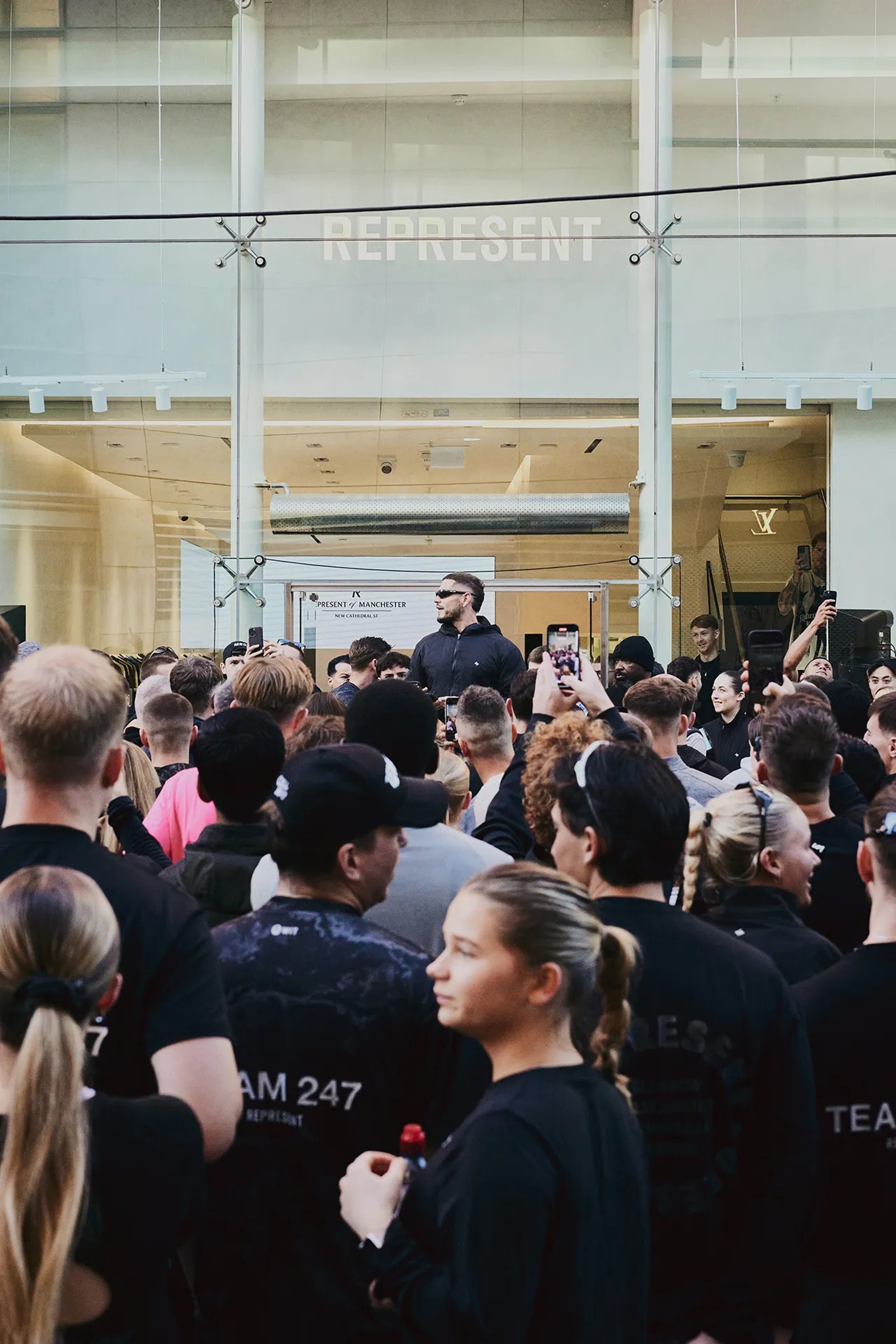
But 247 has expanded well beyond clothing. The brand runs regular run clubs across the UK. It's developed signature sunglasses, shoes, and cleats designed around the specific aesthetic and functional demands of running and cycling. A free fitness app gives users access to George Heaton's personal high-intensity workout structure.
Heaton also launched Cadence, his own drink brand designed around training and recovery, adding another layer to an ecosystem that now spans apparel, footwear, eyewear, digital training, community events, and a beverage brand. Each extension points in the same direction: a life organized around training, built by someone who actually lives that way.
The numbers behind the growth
247 is no longer a side project within Represent's business. The line now accounts for 25 percent of Represent's entire direct-to-consumer revenue. Since January of this year, 247 has doubled its sales in both the United States and Australia. The brand reported a 75 percent increase in overall sales in the months leading up to the Mission 247 event in July 2026.
For context, this is happening in a market where Gymshark, also UK-based, built a multi-billion dollar activewear business over a similar timeframe. 247 is not trying to be Gymshark. The audiences and aesthetics are different. But the fact that a second serious performance apparel brand with genuine community traction has emerged from the UK in the same decade says something about the appetite for brands that feel specific and grounded rather than mass-market.
Mission 247
The most concrete expression of what 247 is trying to build happened at the end of July 2026 with the second annual Mission 247 event, held in the woodland trails of Holmfirth in the Holme Valley.
The format was demanding by design. Forty teams of five competed across 12 consecutive hours. At the top of every hour, at least two team members had to complete a 5.1km trail loop. Whatever time remained within each hour was used to accumulate maximum distance on a ski erg. Points accumulated across the full 12 hours determined the winner, with a £10,000 prize purse on the line.
The first Mission 247, held at Rivington in 2025, drew over 2,000 applicants for 100 spots. The event was held on terrain Heaton described as his personal stomping ground and running route, the kind of detail that tells you something about how close the brand stays to its founder's actual life.
Heaton attended alongside 247 athletes including Jake Dearden, Russ Cook, Alfie Manthorpe, and Hercules Nicolaou, who helped teams manage pacing and recovery strategy across the 12 hours. The event isn't a brand activation with a fitness theme attached to it. It's a serious endurance competition that happens to be organized by a clothing brand, which is a distinction the people who participated understood clearly.
Why this model works
The fitness apparel market has no shortage of brands claiming community and authenticity. Most of them are building those claims through influencer partnerships, sponsored athletes, and marketing budgets. 247 is doing something structurally different.
George Heaton is not a spokesperson for the brand. He is the brand. The workouts in the app are his workouts. The competition is held on terrain he trains on. The drink brand came from his own interest in what he was putting into his body around training. Every extension of 247 traces back to something he was already doing before there was a brand around it.
The head of 247, Matthew Shotton, described it in an interview as having a founder who manifests a driven, high-performance approach in both business and fitness. That's a useful frame, but the simpler version is that the brand's authenticity isn't manufactured. It's just what happens when someone builds a company around how they actually live rather than what the market research says they should be building.
The people buying 247 feel that difference. The community around the brand talks about it differently than most activewear communities talk about their brands, with a sense of participation rather than consumption. That's a hard thing to build and an even harder thing to fake, which is why so few brands in this space have managed it.
Where this is heading
247 is still relatively early in its international expansion. The US and Australia numbers are growing fast but the brand's strongest base remains in the UK, where the community infrastructure of run clubs, the HQ gym, and in-person events has had time to develop.
The question worth watching is whether that community infrastructure translates internationally as the brand scales, or whether 247 becomes another well-regarded activewear line that loses the specific quality that makes it interesting as it grows larger.
Gymshark faced a version of that question and largely answered it by leaning into the community side of the business more aggressively as the brand scaled. Whether 247 follows a similar path, or finds a different way to grow without diluting what makes it work, is the story playing out over the next few years.
What it's built so far is more interesting than most of what exists in the performance apparel space right now, and the trajectory suggests the most interesting parts are still ahead.
Want articles like this one delivered weekly? Join the newsletter and get a quick recap of everything we cover, straight to your inbox, once a week.

© Norva Wellness 2026. All rights reserved.
Want to be the first to hear when we publish something new?
No filler emails. No selling. We promise.