
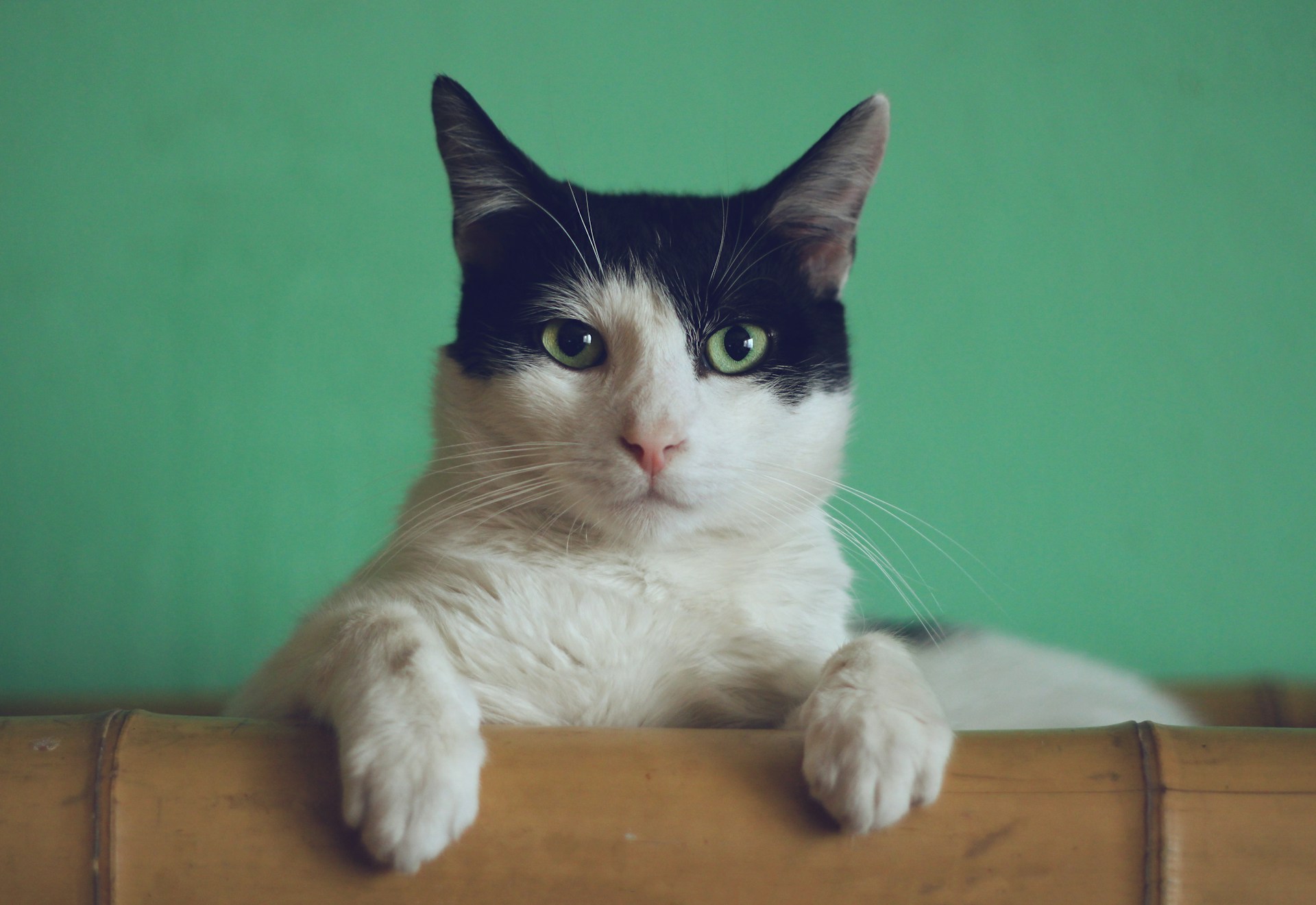
A Cat's Purr Runs at the Exact Frequency Used in Bone Therapy
The frequency of a cat's purr lands precisely in the range medical researchers identified as optimal for bone growth, fracture healing, and tissue repair. That overlap isn't coincidental, and it's only one of several things the research has found.
Max Stephens
6/12/20266 min read
If you own a cat, you already know the feeling. They settle on your lap, start purring, and something in you noticeably relaxes. You figured it was just the warmth, the soft fur, the company.
But it's not just that.
The science behind what a cat's purr actually does to the human body has been building for two decades, and the findings are strange enough to be worth paying attention to. We're talking about measurable effects on bone density, cardiovascular risk, cortisol levels, blood pressure, and tissue healing. That's right, from a cat sitting on your lap.
Let's get into what's actually known here, and where the research stops being conclusive.
How a cat purrs
It helps to understand the mechanism before getting into the effects.
Cats purr through a neural oscillator in the brain that sends rapid signals to the muscles of the larynx. Those muscles twitch at a rate of 25 to 150 times per second, causing the vocal folds to separate rhythmically during both inhalation and exhalation. That's why a cat's purr is continuous in both directions of breath, unlike most animal vocalizations.
The resulting vibrations fall between 20 and 150 hertz depending on the cat. Most domestic cats cluster around dominant frequencies of 25 Hz and 50 Hz. That specific range turns out to be significant.
One more thing worth knowing: cats don't only purr when they're happy. They also purr when stressed, injured, in labor, or recovering from illness. Researchers have proposed that purring may function as a self-soothing and self-repair mechanism. The cat isn't necessarily telling you it's content. It may be using vibration therapeutically on itself.
The bone density connection
This is the part that sounds like wellness folklore until you look at where the frequency numbers come from.
Dr. Clinton Rubin, a researcher at the State University of New York at Stony Brook, spent years studying the effects of low-frequency vibration on bone. His research demonstrated that bones exposed to 30 Hz vibrations for as little as 20 minutes a day showed measurable increases in bone repair rates. Separate research identified 25 to 50 Hz as the optimal frequency range for stimulating bone growth and improving bone density.
A purr analysis conducted at the Cincinnati Zoo measured the dominant frequencies of domestic and wild cat purrs across multiple species. The dominant frequencies were 25 Hz and 50 Hz.
The overlap is not coincidental. Domestic cats, servals, ocelots, and pumas all produce dominant purring frequencies that land precisely in the range medical researchers independently identified as most effective for bone growth and fracture healing. The same frequency range has also shown effects on tendon repair, wound healing, pain reduction, and inflammation management in research using therapeutic vibration platforms.
To be direct about what this means and what it doesn't: there are no controlled human trials proving that sitting near a purring cat improves bone density. The parallel between feline purring frequencies and therapeutic vibration frequencies is real and has been verified by bioacoustics researchers. Whether proximity to a purring cat produces the same tissue effects as a clinical vibration platform is a different question that hasn't been rigorously studied in humans yet.
What the research does suggest is that cats may be using purring as a biological mechanism to maintain their own bone health during periods of rest and inactivity. Cats are notably less prone to joint problems, bone abnormalities, and dysplasia than dogs of comparable size, which is consistent with this hypothesis.
Cardiovascular risk
A 2009 study published in the Journal of Vascular and Interventional Neurology by Dr. Adnan Qureshi at the University of Minnesota's Stroke Institute followed 4,435 Americans over a 20-year period. The finding was striking. People who had never owned a cat had a 40 percent greater risk of death from heart attack and a 30 percent higher risk of death from any cardiovascular disease compared to cat owners, after adjusting for age, gender, blood pressure, smoking, diabetes, cholesterol, and body mass index.
That's a significant association from a large, long-running study.
The researchers were appropriately careful about causation. Qureshi himself noted that the link could relate to the personality type of cat owners rather than the cats themselves. People who gravitate toward cat ownership may be less stress-reactive by nature. The study didn't analyze personality traits, so the mechanism behind the association wasn't established.
What it adds to the picture is a consistent signal across decades of follow-up data that cat ownership correlates meaningfully with reduced cardiovascular risk. Whether that's driven by the purr, the companionship, the stress reduction, or some combination of the above is still an open question.
Cortisol, oxytocin, and what happens in your body
This area has more direct human research behind it.
A 2023 Japanese study found that just 10 minutes of feline interaction was associated with reduced cortisol and increased oxytocin levels in participants. Cortisol is your primary stress hormone. Oxytocin is associated with bonding, emotional regulation, trust, and a measurable reduction in the brain's alarm response through its effects on the amygdala.
A 2002 study found that the oxytocin release triggered by gentle cat contact also helped lower cortisol, which in turn reduced blood pressure and pain sensitivity. A 2025 study found that when owners engaged in relaxed petting and cuddling with their cats, oxytocin rose in both the owner and the cat, provided the interaction wasn't forced on the animal.
The purring itself contributes to this. The rhythmic, low-frequency sound has been compared to meditative and white-noise effects on the nervous system. It's not just the physical contact producing the hormonal response. Listening to purring appears to have a calming effect on heart rate and blood pressure independent of touch.
The autonomic nervous system, which regulates involuntary functions like heart rate and breathing, appears to respond to the vibrations and sound of a purr in ways that shift the body toward a parasympathetic state. That's the opposite of the fight-or-flight stress response.
Sleep
Several studies have noted that people who sleep near purring cats report improved sleep quality. The rhythmic sound functions similarly to white noise, masking disruptive environmental sounds and giving the brain something consistent and calming to track.
The cortisol reduction and parasympathetic nervous system effects described above both support better sleep as a downstream outcome. Lower cortisol at night is one of the conditions associated with better sleep onset and fewer nighttime awakenings.
This one is harder to isolate to the purr specifically, since sleeping with a cat also involves warmth, physical contact, and the general comfort of companionship. But the directional evidence is consistent.
What the research actually supports and what it doesn't
It's worth being straight about where the evidence is strong and where it's extrapolated.
The frequency overlap between cat purring and therapeutic vibration ranges is real, documented by bioacoustics researchers, and the therapeutic effects of those frequencies on bone and tissue are established in clinical research using vibration platforms. What isn't established is a controlled human study proving that cat purring produces the same outcomes as deliberate vibration therapy.
The cardiovascular data from the Qureshi study is large, long-running, and statistically significant after adjusting for major confounders. But it's observational, and causation isn't proven.
The cortisol and oxytocin data is probably the strongest and most directly relevant to daily life. Multiple independent studies across different populations have consistently found that interacting with cats reduces stress hormones and increases bonding hormones in humans, with measurable effects on blood pressure and mood.
The honest summary is that a purring cat on your lap is doing more than providing warmth. The mechanisms are real even if the full picture isn't complete yet.
Why cats might be doing this for themselves first
One of the more interesting angles in this research is the idea that the healing properties of purring may have evolved primarily to benefit the cat, not the human.
Cats are ambush predators that spend the majority of their day resting. Long periods of inactivity are a significant challenge for skeletal and muscular health. The hypothesis is that purring evolved as a low-energy mechanism to stimulate bone density and tissue maintenance during those long rest periods, essentially maintaining biological readiness without the metabolic cost of movement.
If that's accurate, humans sitting near a purring cat are essentially benefiting from a biological mechanism that evolved entirely for the cat's own maintenance. Which makes the whole thing considerably more interesting than the standard "cats are comforting" narrative.
The practical takeaway
You don't need to overhaul your life around this. If you already have a cat, letting them settle near you rather than moving them away has a better case behind it than you might think.
The stress reduction effects are probably the most reliable and most immediately relevant. The cortisol reduction, oxytocin increase, and blood pressure effects are consistent across the research. If you use your cat as a work companion, a winding-down ritual, or a sleep aid, the biology is working in your favor in ways that go beyond simple comfort.
The bone density connection is genuinely fascinating even if it hasn't been proven in a direct human trial. The frequency alignment is too precise and too well-documented in independent research to dismiss, and it gives researchers a biologically plausible mechanism worth investigating seriously.
For now, the cat on your lap is probably doing you more good than you gave it credit for.
Want articles like this one delivered weekly? Join the newsletter and get a quick recap of everything we cover, straight to your inbox, once a week.

© Norva Wellness 2026. All rights reserved.
Want to be the first to hear when we publish something new?
No filler emails. No selling. We promise.