
Why Aluminum Is in Your Deodorant, and What the Industry Knew When They Put It There
The first commercial antiperspirant launched in 1903. It worked by physically plugging your sweat glands shut, and more than a century later that's still exactly how most of them work. Here's the actual history and the honest evidence behind the controversy.
Max Stephens
6/19/20266 min read
Aluminum has been doing a specific job in your deodorant for over 120 years and almost nobody knows what that job actually is.
It's not killing bacteria or masking odor. It's physically plugging your sweat ducts shut so sweat can't reach the surface of your skin in the first place. That's a fundamentally different mechanism than what most people assume their deodorant is doing, and understanding it is the key to understanding both why aluminum ended up in these products and why there's been controversy around it for decades.
Where this actually started
The story actually goes back even further than the 1903 launch date of antiperspirant. Alum, a natural astringent containing aluminum and potassium sulfates, has been used as an antiperspirant since Greek and Roman times. The ancient Egyptians used aluminum crystals for the same purpose thousands of years before that.
The modern commercial version arrived in 1903 with a product called Ever-Dry, using aluminum chloride as the active ingredient. A separate product called Odorono, introduced by Edna Murphey in Philadelphia, used the same compound and became one of the first widely marketed antiperspirants in the United States.
There's a meaningful distinction buried in that history that gets lost in modern conversation. The first commercial deodorant, launched in 1888 by a company called Mum, used zinc oxide and worked by actually killing odor-causing bacteria. It didn't stop sweat at all. Antiperspirants, which arrived 15 years later, were a completely different product built around a completely different mechanism. Aluminum was never used in deodorants designed purely for odor control. It was specifically developed to stop sweating itself.
What aluminum actually does
The mechanism is straightforward once you understand it.
Aluminum salts, most commonly aluminum chloride, aluminum chlorohydrate, or aluminum zirconium compounds, dissolve in the moisture on your skin. As they dissolve, they react with proteins in your sweat to form a gel-like plug. That plug sits at the top of your sweat duct and physically blocks sweat from reaching the surface.
This is not a subtle effect. Depending on activity level, the blocking effect can last for days after a single application, which is part of why some people don't need to reapply antiperspirant every day to stay dry. Prescription-strength antiperspirants, used to treat hyperhidrosis, contain aluminum chlorohydrate concentrations of 10 to 30 percent, far higher than the concentrations found in over-the-counter products.
The early formulations had real problems. Aluminum chloride is highly acidic, and the original products burned sensitive skin and stained clothing badly enough that many people went back to less effective alternatives. It wasn't until the 1940s that a chemist named Jules Montenier developed a less acidic formulation that made the product tolerable for daily use, which is part of why mass adoption took several decades to happen.
What the industry actually knew when they introduced it
When aluminum chloride was first introduced in 1903, the safety questions that exist today simply weren't part of the conversation. The product worked, which was the only bar it needed to clear. By 1938, an estimated 60 percent of American women and 20 percent of American men were already using some kind of underarm product to manage sweat or odor. The category exploded based purely on functional performance, with essentially no toxicological research behind it.
The first serious safety questions didn't surface until the 1960s, when researchers studying occupational and medical aluminum exposure, not deodorant specifically, started noting potential neurological effects at high exposure levels. The 1980s brought speculation about a connection between aluminum and Alzheimer's disease. The 1990s and 2000s brought concern about a possible link to breast cancer, driven partly by research finding aluminum salts present in breast tissue near the underarm.
None of this research was initiated by the companies making the products. It came from independent researchers asking questions decades after the products were already in widespread daily use on hundreds of millions of people. The industry was responding to outside scrutiny rather than leading any safety investigation themselves, which is a meaningfully different posture than companies often claim publicly.
Where the evidence actually stands today
Today, the popular conversation about aluminum deodorant has seemingly outrun the actual science in both directions.
On Alzheimer's disease, the current evidence does not support a meaningful connection. Aluminum exposure through skin absorption from antiperspirant is extremely limited compared to aluminum from other dietary and environmental sources, and large reviews of the research have not established antiperspirant use as a risk factor for Alzheimer's. The original concern stemmed partly from aluminum being found in the brain plaques of Alzheimer's patients, but follow-up research has not established that topical aluminum exposure meaningfully contributes to that.
On breast cancer, the American Cancer Society has stated there is no scientific evidence that antiperspirant use causes or worsens breast cancer. A frequently cited 2017 study found that women with breast cancer reported more frequent and earlier antiperspirant use than women without breast cancer, and found higher aluminum concentrations in the breast tissue of the cancer group specifically in the upper outer quadrant nearest the underarm. The researchers were direct that this didn't establish causation and couldn't rule out the possibility that the relationship ran in the opposite direction. It's a finding worth knowing about, not a settled conclusion.
What's actually well established is that aluminum compounds can cause contact dermatitis and skin irritation in some people, which is a real and common issue but a fundamentally different concern than cancer or neurological disease.
The honest summary is that decades of research have not produced a confirmed mechanism by which typical antiperspirant use causes serious disease, while also not fully closing the door on long-term cumulative effects that are difficult to study definitively. That's an unsatisfying answer, but it's the accurate one. This isn't to say there is no correlation, researchers just haven't proven one yet.
Where this leaves the industry now
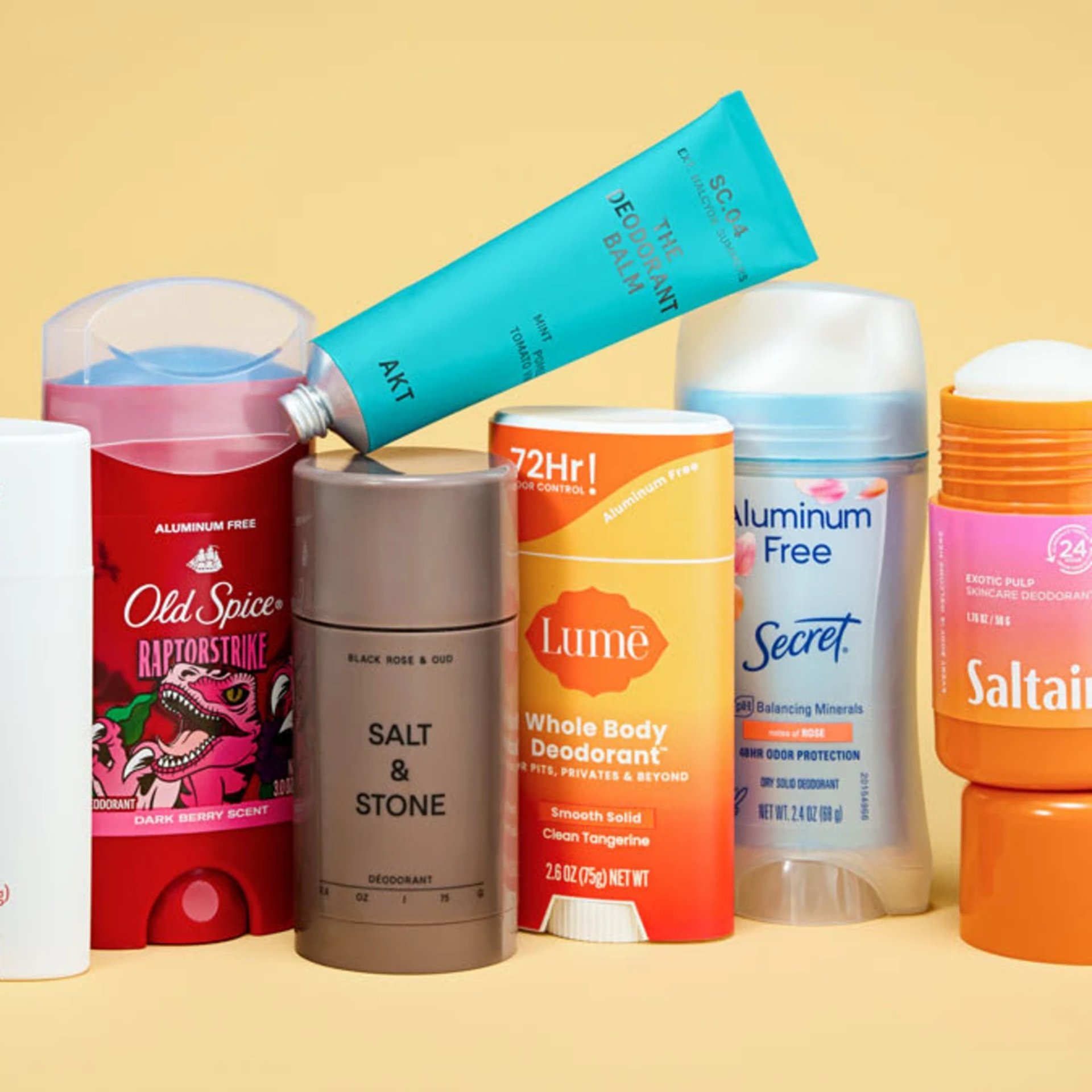
The aluminum-free and natural deodorant category has grown into a real market segment, driven less by definitive new science and more by accumulated consumer unease over several decades of unresolved questions.
That's produced two different responses from the industry. Established antiperspirant brands have largely held their position, pointing to FDA approval and the absence of conclusive evidence of harm. Newer brands have built entire identities around aluminum-free formulations, often marketing the absence of aluminum alongside the absence of several other ingredients people have learned to be cautious about.
It's worth noting that aluminum-free deodorants function differently by design. Without the pore-blocking mechanism, you will still sweat normally. These products work by controlling odor through antibacterial ingredients, absorbent powders like baking soda or arrowroot, or odor-neutralizing compounds, not by stopping sweat itself. That's a different value proposition than what traditional antiperspirants offer, and it's worth choosing based on what you're actually trying to solve rather than assuming one approach is a direct substitute for the other.
The other ingredients worth knowing about
Aluminum gets most of the attention, but it's not the only ingredient in this category worth understanding.
Parabens, including methylparaben, propylparaben, and butylparaben, are preservatives that have demonstrated weak estrogenic activity in laboratory studies. The word weak matters here. These compounds are far less potent than the body's own estrogen, and lab study doses often exceed realistic exposure from a single product. The concern researchers raise is about cumulative exposure across the many personal care products most people use daily, not any single product in isolation. Most major brands have moved away from parabens in recent years regardless, largely in response to consumer demand rather than new safety findings.
Triclosan was used as an antibacterial agent in some deodorants and soaps. Animal studies have shown it can lower thyroid hormone levels, which matters because thyroid hormones regulate metabolism and development. The FDA banned triclosan in over-the-counter antiseptic wash products in 2016, though it remained legal in some deodorant formulations. It's largely been phased out of the category voluntarily as brands moved toward other antibacterial approaches.
Phthalates are used to help fragrances last longer on skin and are classified as endocrine disruptors with documented effects on reproductive hormones. The tricky part is that they rarely appear on ingredient labels by their specific names. They hide inside the word "fragrance" or "parfum," which manufacturers are permitted to use as a catch-all term that doesn't require disclosing the specific compounds inside it. This makes phthalates considerably harder to avoid than ingredients that are required to be listed explicitly.
Propylene glycol is used to create smooth texture in sticks and gels. It's generally recognized as safe at the concentrations used in cosmetics but can cause irritation, particularly on freshly shaved skin where the skin barrier is already compromised.
What this actually means for you
If you're someone who sweats heavily and antiperspirant solves a real functional problem for you, the current evidence doesn't support discontinuing it out of fear. The research on aluminum and serious disease has had decades to produce a clear signal and hasn't.
If you're someone who prefers to minimize exposure to ingredients with unresolved long-term questions, that's also a reasonable position, and aluminum-free alternatives have improved significantly in performance over the last several years compared to where the category started.
The ingredient worth paying closer attention to, regardless of which camp you're in, is fragrance. Because phthalates and other compounds can hide inside that single word on a label, choosing fragrance-free products is one of the more effective ways to reduce exposure to ingredients you can't actually identify by reading the label.
Personal care decisions don't need to be driven by fear or by blind trust in regulatory approval. They're more useful when they're driven by understanding what an ingredient is actually doing, what the evidence says about it, and what tradeoff you're making by choosing it.
Want articles like this one delivered weekly? Join the newsletter and get a quick recap of everything we cover, straight to your inbox, once a week.

© Norva Wellness 2026. All rights reserved.
Want to be the first to hear when we publish something new?
No filler emails. No selling. We promise.