
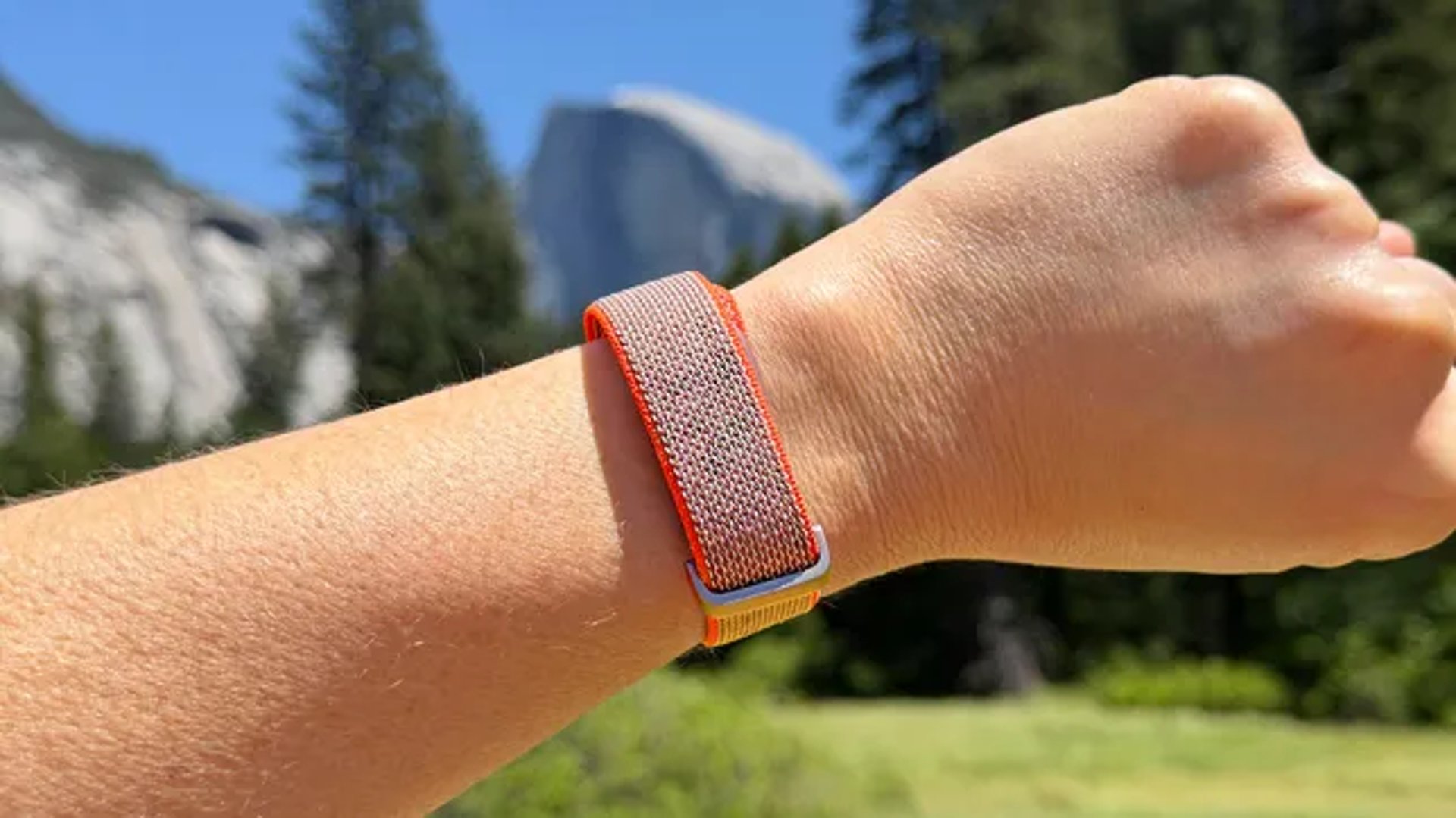
Google Just Entered the Whoop Lane. Is It Worth It?
The Fitbit Air launched at $99 with no mandatory subscription, screenless design, and Google's AI health coaching built in. For a category that's been charging athletes hundreds of dollars a year, that could be a significant disruption.
Max Stephens
6/15/20265 min read
The recovery wearable market has been running a fairly comfortable duopoly for the last few years.
Whoop owns the serious athlete end. You pay a subscription, get the band included, and access the most refined strain and recovery analytics available on a consumer device. Oura owns the sleep and readiness end with a ring form factor and a cleaner aesthetic, plus its own subscription on top of the hardware cost.
Both are genuinely good products. Both are also expensive to live with over time.
Google just launched something that disrupts that math considerably.
The Fitbit Air launched on May 26, 2026, priced at $99.99 with no mandatory subscription. It's screenless, weighs 12 grams total, and tracks heart rate, HRV, SpO2, skin temperature, sleep stages, and activity continuously. It pairs with the Google Health app and includes three months of Google Health Premium, which unlocks a Gemini AI-powered health coach.
The timing, the price, and the positioning are all deliberate. Google built this to compete directly with Whoop and Oura, and the value proposition is hard to ignore.
What it actually is
The Fitbit Air is a small puck-style sensor on a band, 8.3mm thick, with no display, no GPS, no notification support, and no way to check the time on your wrist. Google made those omissions intentionally, just like Whoop did years ago.
The screen is what kills battery life in most wearables. Remove it and you get a week of continuous monitoring at 12 grams of weight. The device charges fully in about 90 minutes via a proprietary magnetic charger.
The sensors include an optical heart rate monitor running continuously, an accelerometer and gyroscope, red and infrared sensors for SpO2 monitoring, a skin temperature sensor, and a vibration motor for silent alarms. Compared to the Fitbit Charge 6, you lose ECG, EDA scans, built-in GPS, and NFC. You gain significantly better battery life and a form factor light enough to actually sleep in.
Google describes it as their most in-depth health insights yet in a screenless design built for comfortable 24/7 monitoring. The hardware philosophy is straightforward: collect continuously, review when you choose, stay completely out of the way the rest of the time.
The metrics that matter
For anyone who cares about recovery tracking, the relevant metrics on the Fitbit Air are HRV, sleep stages, resting heart rate, SpO2, and a Daily Readiness score. All of those are available on the free tier with no subscription required after the three-month trial.
The free features include all health metrics including HRV, SpO2, breathing rate, and resting heart rate, full sleep stages and Sleep Score, activity tracking with Cardio Load and Daily Readiness, and manual workout logging.
The subscription tier at $9.99 per month unlocks the Gemini AI health coach, which analyzes your tracked data and generates personalized recommendations. One differentiator worth noting: the Health Coach can factor in your medical history when making recommendations, something no competing wearable platform currently offers.
On sleep tracking accuracy, a 2024 systematic review in JMIR mHealth found Whoop had the smallest disagreement with lab polysomnography on deep sleep but the largest on REM, while Fitbit was stronger on REM. Neither is perfect, and the honest position on wearable sleep tracking across the board is that it's useful for tracking your own trends over time rather than delivering clinically precise nightly data.
The cost comparison
This is the part of the Fitbit Air story that the existing players don't love.
The five-year cost gap between Fitbit Air without Premium and Whoop Peak is approximately $1,095 in Fitbit's favor. Even with Premium added on Fitbit, the gap is still around $625.
Whoop's membership starts at $199 per year and goes up to $359 for the Peak tier, with the band included in the subscription. Oura requires you to buy the ring first, currently starting at $349, and then pay $5.99 per month or $69.99 per year on top of that for meaningful insights.
Over three years, a Fitbit Air without Premium costs $100. Whoop over the same period costs between $597 and $1,077 depending on tier. That math is significant for anyone who isn't a professional athlete with a sponsor subsidizing their equipment.
Where Whoop still wins
The Fitbit Air is a compelling product at a compelling price. It's also not the most capable recovery tracker on the market, and it's worth being direct about that.
Whoop samples heart rate 52 times per second. The Fitbit Air uses continuous optical monitoring but at lower sampling frequency. For athletes whose training decisions are heavily data-driven, that difference in granularity matters.
Whoop wins on battery life, its bicep band ecosystem, and the depth of its recovery and strain analytics. If you're a serious endurance or strength athlete using recovery data to make daily training decisions, Whoop's system is more refined and more comprehensive. The Whoop Life tier also includes medical-grade ECG and blood pressure monitoring, which the Fitbit Air doesn't offer.
Oura still has an edge on sleep tracking accuracy in ring form, and the ring format is genuinely better for some people than a wrist band.
The Fitbit Air is the right product for someone who wants passive, continuous health monitoring with decent recovery insights and no ongoing subscription eating into their budget. It's a different audience than Whoop and Aura's core user.
The Google Health angle
One thing the Fitbit Air has that Whoop and Oura don't is the backing of Google's data infrastructure and AI development resources.
By the end of 2026, cross-platform support has been promised, with Apple Watch, Garmin, Whoop, and Oura all expected to pipe data into Google Health. If that materializes, Google Health becomes a central hub for health data regardless of what hardware you wear. That's a meaningful platform play that goes beyond the Fitbit Air itself.
The Gemini-powered health coach is also worth watching as it matures. Early reviews describe it as useful but inconsistent. As it ingests more personal data over time, personalized recommendations should improve. Whether Google's AI coaching eventually closes the gap with Whoop's recovery system is a fair question with no clear answer yet.
Who it's actually for
The Fitbit Air makes the most sense for three groups of people.
The first is anyone who has been curious about recovery tracking but couldn't justify the cost of the competition. The Fitbit Air gets you into the category with a one-time purchase and no subscription required for the core functionality.
The second is existing Fitbit or Google Pixel users already invested in the Google ecosystem. The Air integrates cleanly with Pixel Watch, Google Health, and Google One, and creates a more complete health picture across devices.
The third is anyone who has tried sleeping in a smartwatch and found it annoying. The 12-gram weight and screenless design make it genuinely comfortable overnight in a way that larger devices aren't.
For serious athletes who are training hard and making daily decisions based on recovery data, Whoop remains the more powerful system. But for the broader population of people who want to understand their sleep, HRV trends, and daily readiness without paying subscription fees indefinitely, the Fitbit Air is the most compelling option in that category at this price.
The bigger picture
The Fitbit Air's launch is part of a broader shift in the wearable space. In 2025 and into 2026, every major player in the health wearable space crossed the same threshold: they stopped competing on hardware specs and started competing on intelligence. The sensors are good enough across devices. The differentiation is now in what the software does with the data.
Google has significant advantages in AI and data processing. If they execute on the platform vision, the Fitbit Air could look like the affordable entry point to something much larger rather than a standalone product.
For now it's a $99 screenless tracker with solid fundamentals, no mandatory subscription, and Google's full ecosystem behind it. In a category that's been charging athletes $200 to $360 a year to know how tired they are, that's worth paying attention to.
Want articles like this one delivered weekly? Join the newsletter and get a quick recap of everything we cover, straight to your inbox, once a week.

© Norva Wellness 2026. All rights reserved.
Want to be the first to hear when we publish something new?
No filler emails. No selling. We promise.