
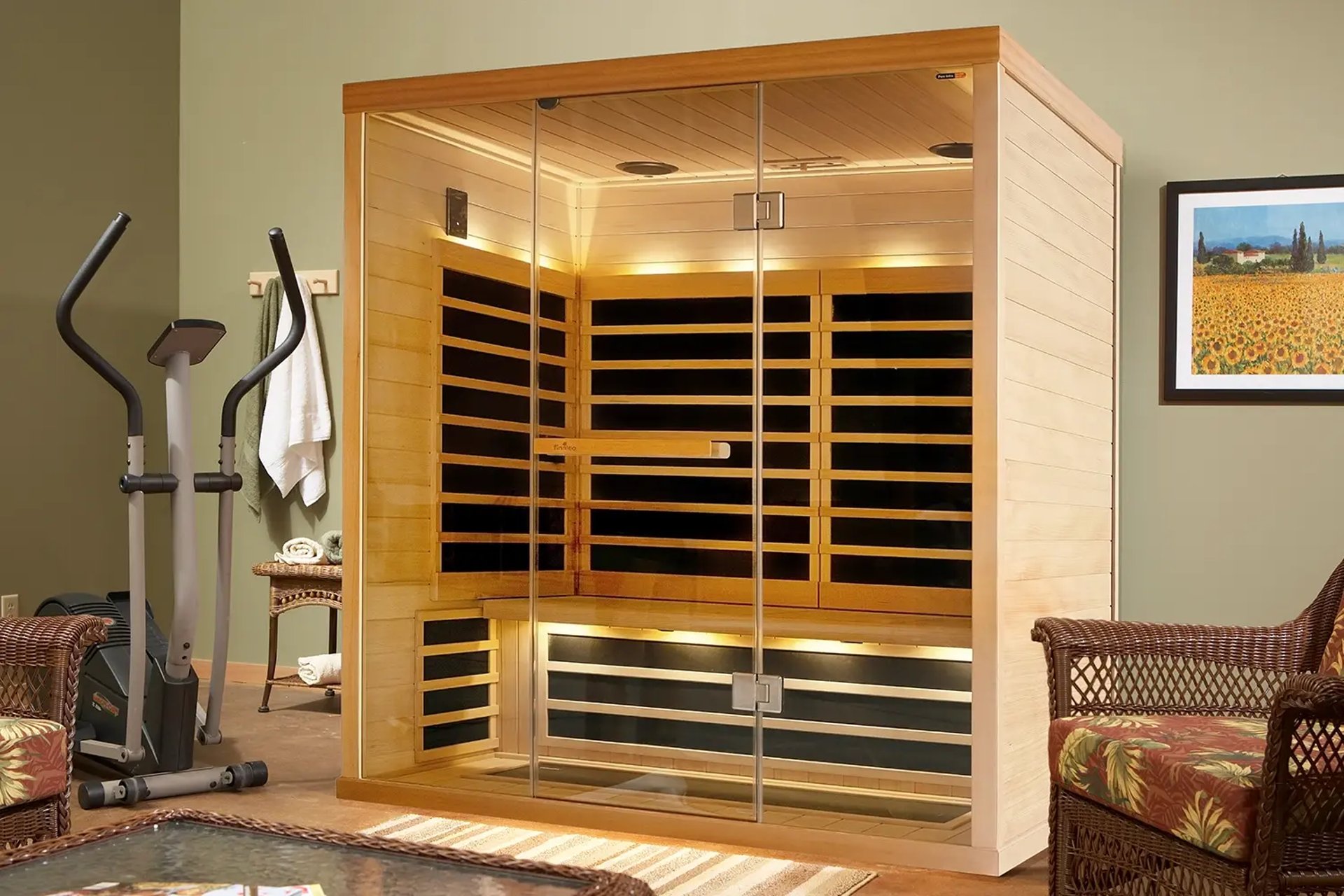
Infrared vs Traditional Sauna: Different Heating Mechanism, Different Effects
Most people buying infrared saunas think they're getting the benefits from the Finnish cardiovascular research. The evidence tells a more specific story than that.
Max Stephens
7/21/20264 min read
The Finnish sauna research is some of the most compelling data in all of wellness. A landmark study published in JAMA Internal Medicine followed over 2,300 middle-aged men for more than 20 years and found that those who used a sauna 4 to 7 times per week had a 63 percent lower risk of sudden cardiac death and a 50 percent lower risk of cardiovascular mortality compared to once-weekly users. Follow-up analyses found 40 percent lower dementia risk and 65 percent lower Alzheimer's risk in the most frequent users.
Those numbers get cited constantly in sauna marketing. What doesn't always get mentioned is that every one of those studies was conducted on traditional Finnish saunas running at 170 to 190 degrees Fahrenheit with steam.
The infrared sauna sitting in someone's spare bedroom runs at 120 to 150 degrees using a completely different heating mechanism. This is worth clearing up since I get the feeling most people think a sauna is just a sauna.
How the two work differently
Traditional saunas heat the air in the room to a high temperature. Your body responds to that hot environment by vasodilating, sweating heavily, and driving heart rate up in a way that research has consistently compared to moderate aerobic exercise. The steam component, produced by throwing water on heated rocks in the Finnish tradition, increases perceived temperature through humidity and adds respiratory benefits from breathing warm steam.
Infrared saunas work differently. Rather than heating the air, infrared panels emit wavelengths of light that the body absorbs directly, heating tissue from the inside out at a lower ambient temperature. The experience is less intense, more tolerable for longer sessions, and produces a different physiological response than sitting in 185-degree air with steam.
That's not a criticism of infrared. It's just a description of what it actually is, which is a different tool than a traditional sauna, producing different effects through a different mechanism.
Where the Finnish data does and doesn't apply
The cardiovascular mortality findings, the dementia data, the long-term longevity associations, all of it comes from traditional sauna research. There are no equivalent long-term population studies on infrared sauna use and all-cause mortality. That gap doesn't mean infrared is ineffective. It means those specific claims aren't supported by infrared-specific evidence, at least yet.
Researchers have noted that the mechanism behind the traditional sauna's cardiovascular benefits likely involves the high-temperature heat stress response, the significant heart rate elevation, the substantial cardiovascular demand that closely mimics vigorous exercise, and the repeated heat shock protein activation over years of consistent use. Whether a lower-temperature infrared session produces the same systemic cardiovascular stress is an open question, and the answer is that the data doesn't yet confirm it does.
Where infrared has its own research
The picture isn't one-sided. Infrared has a growing and legitimate evidence base, it just applies to a different set of outcomes.
Recovery is where both traditional and infrared saunas have solid support, through overlapping but distinct mechanisms. Traditional saunas support recovery through heat shock protein activation, increased blood flow, and the cardiovascular adaptation that comes from regular thermal stress. Infrared's specific advantage in this category comes from the depth at which infrared wavelengths penetrate tissue, reaching muscle, connective tissue, and joints more directly than hot air does. Multiple studies have found 20 to 30 percent reductions in delayed onset muscle soreness with regular post-training infrared sessions, and a 2025 trial published in Frontiers in Sports and Active Living documented 12 percent neuromuscular performance gains alongside 25 percent reductions in creatine kinase, a marker of muscle damage, in athletes using infrared after training.
Chronic pain is an area of active and promising research. Multiple trials have shown 40 to 50 percent reductions in pain scores after 8 to 12 weeks of consistent infrared use for conditions including rheumatoid arthritis and fibromyalgia. The proposed mechanism involves heat's effect on synovial fluid viscosity and the anti-inflammatory response to infrared wavelengths in joint and connective tissue.
Skin health has documented effects from infrared specifically. Studies have found collagen density increases after 12 weeks of regular infrared use combined with red light therapy, driven by the stimulation of fibroblast activity in skin tissue.
Stress reduction and sleep improvement appear consistently across both sauna types. Heat exposure triggers parasympathetic nervous system activation and cortisol reductions of 15 to 20 percent have been documented in sessions using both formats. This may be the most accessible and broadly applicable benefit for most people using either type regularly.
The detox claim
This one deserves direct treatment because it's everywhere in infrared sauna marketing.
Sweat does carry trace amounts of certain compounds, including BPA and heavy metals. A 2012 study published in the journal Blood, Urine, and Sweat found BPA concentrations 16 times higher in sweat than in urine, which is a real finding that gets cited frequently in the detox conversation.
The part that gets left out is the actual magnitude of plasma clearance through sweating. Without changing dietary and environmental inputs, sweating removes a limited fraction of total body burden for most compounds. The detox marketing takes a legitimate biological observation and extrapolates it into a claim that isn't supported by the scale of the effect. Sweating is a healthy biological process. Regular infrared sessions produce more of it. That's worth something. It's just not the comprehensive detoxification protocol it gets marketed as.
Who each type actually makes sense for
The question most people are actually asking when they research infrared versus traditional isn't which one has better science in the abstract. It's which one makes sense for their situation and goals.
Traditional saunas with high temperatures and actual steam, used consistently over months, years, and decades, are where the cardiovascular mortality, dementia, and long-term longevity data lives. If those outcomes are the priority and you're building a sauna or choosing a gym specifically around that evidence base, the traditional format is what the research points to.
Infrared makes practical sense for a different set of situations. For athletes focused on post-training recovery and reduced muscle soreness, the infrared-specific tissue penetration data is real and applicable. For people managing chronic pain conditions where regular high-temperature heat exposure isn't tolerable or isn't recommended, infrared's lower temperature makes consistent use more realistic. For skin health specifically, the infrared and red light therapy combination has documented effects. For anyone building a home sauna where the lower electrical requirements, simpler installation, and lower operating temperature make the difference between having one and not having one, infrared is a legitimate path to regular heat exposure even if the ceiling of benefit differs from a traditional setup.
Neither is universally better. They're different tools with different evidence bases pointing at different outcomes. The frustration in this category comes from the marketing of one as a direct substitute for the other, which the research doesn't support.
Want articles like this one delivered weekly? Join the newsletter and get a quick recap of everything we cover, straight to your inbox, once a week.

© Norva Wellness 2026. All rights reserved.
Want to be the first to hear when we publish something new?
No filler emails. No selling. We promise.