
Melatonin Works, Just Not at the Dose You're Taking It
It's the most popular sleep supplement in the country and one of the least regulated. Here's what the research actually supports, where the dosing gets messy, and what's happening with the products on the shelf.
Max Stephens
6/23/20266 min read
Melatonin use among American adults increased more than fivefold between 1999 and 2018. It's sold without a prescription, marketed in gummy form to children, and treated by most people as a basically harmless sleep aid.
The actual research tells a more complicated story. Melatonin works, but the mechanism is different from how it's marketed, the effective dose is lower than what most products sell, and there are real quality control problems that have nothing to do with the hormone itself.
Here's what the evidence actually shows, broken into what's solid, what's overstated, and what's an actual mess.
The good: what melatonin actually does
Melatonin isn't a sedative. That's the most important thing to understand before researching any further.
Your pineal gland produces melatonin naturally in response to darkness, and it functions as a signal rather than a switch. It tells your brain that nighttime has arrived. It doesn't force unconsciousness the way a sedative or sleeping pill does. That distinction explains almost everything about how supplemental melatonin performs in research.
Where melatonin has the strongest evidence is in circadian rhythm shifting rather than general insomnia. For jet lag, it has some of the most consistent data in the entire sleep supplement category, helping travelers adjust to a new time zone faster than they would otherwise. For delayed sleep-wake phase disorder, where someone's internal clock runs persistently later than a conventional schedule, melatonin taken at the right time can meaningfully shift sleep timing earlier. Shift workers managing irregular schedules see similar benefits.
For general insomnia in otherwise healthy adults, the picture is more modest. A frequently cited meta-analysis covering 19 studies and over 1,600 participants found melatonin reduced the time it takes to fall asleep by about 7 minutes and increased total sleep time by about 8 minutes compared to placebo. Sleep researcher Matthew Walker has cited similarly modest figures, noting in interviews that some meta-analyses put the sleep onset benefit at closer to 3 minutes, barely separating from placebo. That's a real effect, but it's not the dramatic sedation that the marketing and the gummy packaging tend to imply.
There's also reasonable evidence supporting melatonin for specific situations beyond jet lag and circadian timing. It's been studied for reducing pre and post-surgical anxiety, for sleep difficulties in children with neurodevelopmental conditions like autism, and for sleep onset in children with atopic dermatitis where itching disrupts sleep. These are narrower use cases than the supplement's reputation suggests, but they have research behind them.
The bad: the dosing makes almost no sense
Here's where things get strange.
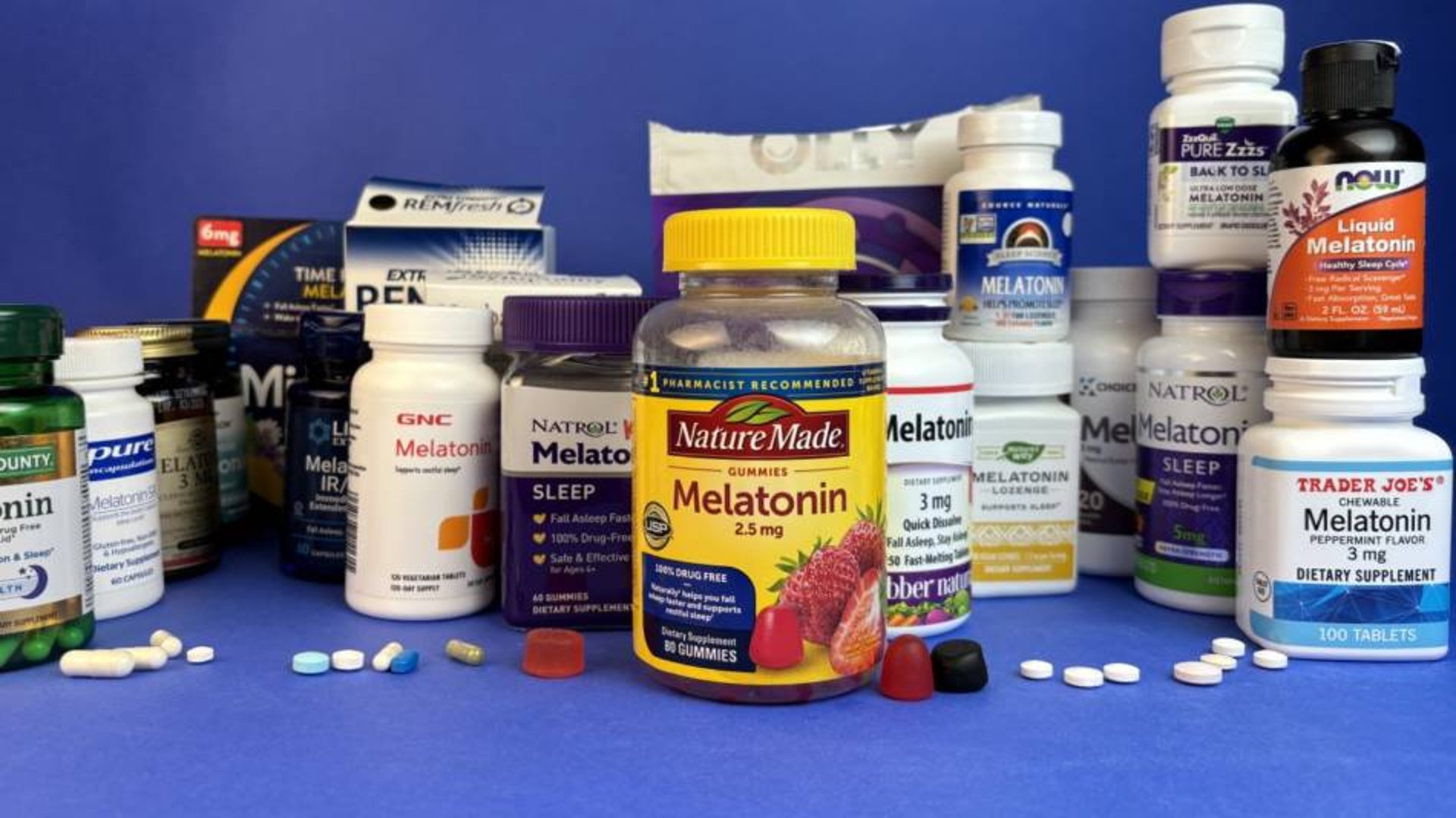
The amount of melatonin your body produces and releases naturally at night is a fraction of a milligram. Most over-the-counter products sold in the United States contain somewhere between 1 and 20 milligrams, an order of magnitude above what your body actually produces.
That mismatch shouldn't be understated. Some of the research on dosing has found that lower doses, in the 0.3 to 1 milligram range, were as effective or more effective at reducing sleep onset latency than higher doses of 2 to 5 milligrams. A separate dose-response analysis found effects continuing to increase up to around 4 milligrams per day before plateauing. The research isn't fully consistent on where the optimal dose sits, but multiple independent findings converge on the same general conclusion: more melatonin isn't reliably better, and the doses most products are sold at have little grounding in what the studies actually used.
Sleep expert Matthew Walker recommends a range of roughly 0.5 to 2 milligrams, taken 45 to 90 minutes before bed, and has been direct that most people taking melatonin are taking considerably more than that. Walker has said there isn't strong data demonstrating that melatonin creates dependency the way some sleep medications do, with one important caveat: there's some suggestion that consistently taking a high dose may suppress your body's own natural melatonin production. Staying at a low, consistent dose rather than escalating it appears to be the more defensible approach than avoiding melatonin altogether.
Peter Attia has taken an even more conservative position publicly, stating he doesn't recommend exceeding 1 milligram in the cases where he does suggest melatonin, specifically because that's roughly the dose needed to bring blood concentrations up to a normal nighttime physiological level rather than far beyond it.
The ugly: what's actually in the bottle
This is the part of the melatonin conversation that has nothing to do with the hormone itself and everything to do with how it's manufactured.
Because melatonin is sold as a dietary supplement rather than regulated as a drug, the FDA doesn't oversee the accuracy of dosing claims or purity the way it would for an approved medication. A 2023 study published in JAMA tested 25 melatonin gummy products and found that 22 of them, 88 percent, were inaccurately labeled. The actual melatonin content ranged from 74 percent to 347 percent of what the label claimed. One product contained no detectable melatonin at all. A separate 2017 Canadian study testing a broader range of product types found an even wider spread, from 17 percent to 478 percent of the labeled amount, with the most extreme deviations showing up in chewable products.
The supplement industry's trade association pushed back on the JAMA findings, arguing the researchers applied a pharmaceutical accuracy standard rather than the dietary supplement standard the products were actually held to, and noted that most of the tested products were labeled for adult use rather than pediatric use. That's a fair point about regulatory framework. It doesn't change the practical reality that a consumer picking a bottle off a shelf has limited ability to know whether they're getting close to the labeled dose.
The consequence of that inconsistency shows up most clearly in pediatric data. Accidental melatonin poisoning in children increased by 530 percent over a recent decade, driven largely by gummy formulations that look and taste like candy landing in the hands of children under five. That's a packaging and accessibility problem as much as a dosing one, but it's a real and growing one.
If you're buying melatonin, looking for the USP Dietary Supplement Verified seal is the one concrete step that meaningfully reduces the odds of significant dosing inaccuracy, since it requires third-party verification that the product contains what the label claims.
What about long-term safety
This is the honest gap in the research.
Short-term studies, generally spanning weeks to a few months, have consistently shown a low rate of side effects, mostly mild grogginess, headache, or dizziness. What's less established is what happens with years of consistent nightly use, particularly in children, where the research is sparser and the developmental considerations are different from adults.
Some older rodent studies from decades ago found that very high doses affected reproductive development, which is part of why some researchers remain cautious about pediatric use specifically. That's animal data at doses far exceeding typical human use, not a confirmed human risk, but it's part of why caution with children specifically is reasonable.
For most healthy adults, the available evidence doesn't show a concerning long-term risk profile at low to moderate doses. It's also true that the longest, most rigorous studies simply haven't been run for the kind of years-long nightly use that's become common.
Where this leaves you
The research supports a fairly specific picture. Melatonin is genuinely useful for circadian timing problems like jet lag and delayed sleep phase, has narrower but real evidence for situations like pre-surgical anxiety and certain pediatric sleep conditions, and has a modest, real but unspectacular effect on general sleep onset and duration in healthy adults.
The dose that's likely to do that job is considerably lower than what most products on the shelf contain, somewhere in the 0.5 to 2 milligram range rather than the 5 to 10 milligrams that's become standard in many gummies and tablets. Taking it consistently at a low dose, timed correctly before bed, appears more defensible than either avoiding it entirely or escalating the dose when it doesn't seem to be working.
The quality control problem is real and worth taking seriously, particularly if melatonin products are anywhere near children. Looking for the USP verification seal and keeping gummy products away from young kids addresses most of the actual risk that shows up in the data.
What the research doesn't support is either extreme. Melatonin isn't a harmless gummy vitamin, and it isn't a dangerous hormone disruptor either. It's a mild, situational sleep aid that works best for a narrower set of problems than its popularity suggests, sold in doses that frequently don't match what the evidence says is actually effective.
Want articles like this one delivered weekly? Join the newsletter and get a quick recap of everything we cover, straight to your inbox, once a week.

© Norva Wellness 2026. All rights reserved.
Want to be the first to hear when we publish something new?
No filler emails. No selling. We promise.